Illinois Expands Access to Earlier, More Precise Preterm Birth Risk Assessment.
Beginning July 1, Illinois Medicaid expanded coverage for evidence-based preterm birth risk assessment, supporting clinicians in earlier identification of all patients at increased risk of preterm birth to help tailor prenatal care.

1 in 10
babies in the U.S. are Born Prematurely.1
34.2%
Preterm birth contributes to 34.2% of newborn deaths.2
Up to 50%
of patients who Deliver Prematurely Have no Known Risk Factors.3
The problem
The Challenge of Identifying Preterm Birth Risk Before Warning Signs Appear
Using traditional methods alone, 50% of women who deliver early are not identified ahead of time.
Without an early indication of risk, it can be difficult to provide proactive care and determine which patients may benefit from additional monitoring and resources.
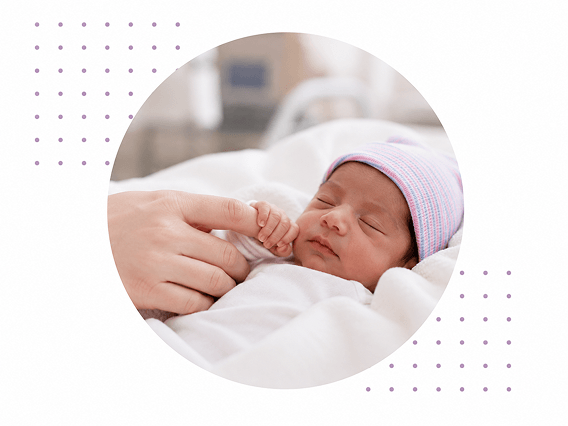
How PreTRM Helps
Understand Risk Earlier
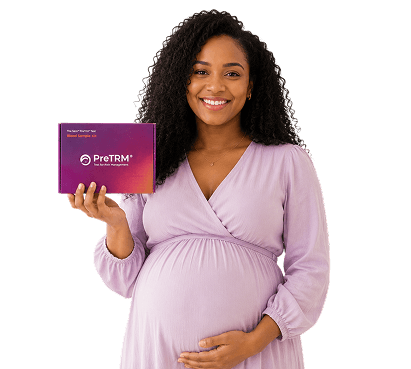
The PreTRM® Test is a blood-based biomarker test that identifies a woman’s risk of spontaneous preterm birth—even when she has no known risk factors. Performed early in pregnancy, this test measures placentally expressed proteins to provide insight into risk sooner, helping clinicians take informed action and support proactive, personalized care.
Step 1
Order Your Patient’s PreTRM Test
Order in minutes through our secure provider portal or paper test request form from kits already in your office.

Step 2
Collect the Blood Sample
One blood draw at your patient’s routine prenatal visit between 18⁰⁄₇–20⁶⁄₇.

Step 3
Receive and Review the PreTRM Test Results
Receive results securely, showing higher risk or not higher risk, to help guide care and intervention decisions.


The Illinois news
What SB3365 Means for Your Practice
Illinois’ expansion of Medicaid coverage for proteomic biomarker testing is expected to make tools such as the PreTRM® Test more accessible to pregnant women who can benefit from early identification of preterm birth risk. For clinicians, this creates an opportunity to incorporate evidence-based risk assessment into prenatal care pathways and support more informed, personalized care decisions.
The legislation also provides reimbursement for care management services and interventions shown to improve outcomes. Together, access to biomarker testing and support for care management allow clinicians to identify higher-risk patients earlier, connect them with appropriate resources, and strengthen coordinated care for Medicaid patients across Illinois.
Your Proof
Supported by a Robust Body of Evidence
10+ peer-reviewed publications, including a large randomized controlled trial demonstrating improved outcomes associated with screening for preterm birth risk using the PreTRM Test and implementing accessible, targeted interventions for patients identified as being at increased risk.
Studied in a Broad Patient Population
Studied in more than 23,000 patients across the United States and a broad range of clinical practice settings, including university hospitals and community hospitals. This extensive clinical experience reflects the use of the PreTRM Test across diverse care environments and supports its applicability in real-world obstetric practice.
Connect With a Sera
Representative
Get answers about the PreTRM® Test, Illinois Medicaid coverage, ordering, and how to incorporate evidence-based risk assessment into your prenatal care workflow.
Learn How PreTRM Supports Earlier Risk Assessment
Explore the clinical evidence behind the PreTRM® Test and understand how earlier identification of preterm birth risk can help inform personalized care planning.
Add Evidence-Based Risk Assessment to Your Prenatal Care Approach
With Illinois Medicaid coverage for tests like PreTRM® effective July 1, more eligible patients can access evidence-based preterm birth risk assessment, helping healthcare providers identify all patients at increased risk earlier and support more informed, personalized care decisions.
Connect with us
Get PreTRM for your patients
Questions you might have
The PreTRM Test stratifies a patient’s risk of spontaneous preterm birth relative to the general obstetric population, enabling proactive care planning and discussion of risk reduction.
The test requires a single blood sample collected between 18⁰ᐟ₇ to 20⁶ᐟ₇ weeks of gestation during the second trimester of pregnancy (126–146 days) paired with personal history questions about a mom’s prior pregnancies and clinical factors.
The test is appropriate for pregnant women with singleton pregnancies who show no signs or symptoms of preterm labor.
With the passage of SB3365, the PreTRM Test is expected to be covered for all Medicaid patients in the state of Illinois. Services covered by Medicaid typically have no patient cost share.
Yes. The laboratory is accredited by the College of American Pathologists (CAP). CAP Number: 8715460 | AU-ID: 1685065.
Yes. Sera Prognostics’ laboratory is certified under the Clinical Laboratory Improvement Amendments (CLIA). CLIA ID: 46D2064326.
Orders must be placed by a licensed healthcare provider, such as an OB-GYN or maternal-fetal medicine specialist. You can submit orders online for faster report delivery and patient support or use a paper requisition form.
References
- Hamilton BE, Osterman MJK. Births: Provisional Data for 2024. Vital Statistics Rapid Release. 2025;38.
- Callaghan WM, et al. The contribution of preterm birth to infant mortality rates in the United States. Pediatrics. 2006;118(4):1566-73.
- Iams JD, et al. Prevention of Preterm Parturition. N Engl J Med. 2014;370:254-61. DOI: 10.1056/NEJMcp1103640.