
Pregnancy is a time of incredible transformation for mom and baby. Over the course of about nine months, a fertilized egg transforms into a baby who is ready to meet the world. At the same time, your body adapts to meet the demands of your growing baby. Explore the timeline below to see what is happening with both your baby and your body in each of the stages of fetal development from embryo to fetus to newborn baby.
While modern NICUs are wonderfully equipped to care for preterm babies in the event of an early delivery, there is no doubt that the womb is nature’s preferred environment to nurture a growing fetus. By studying outcomes for preterm babies, scientists have learned that each week of development in the uterus translates into better survival rates and less time in the hospital.
Learn More About Preterm Birth
Access our resources for families

Explore your baby’s development, week by week:
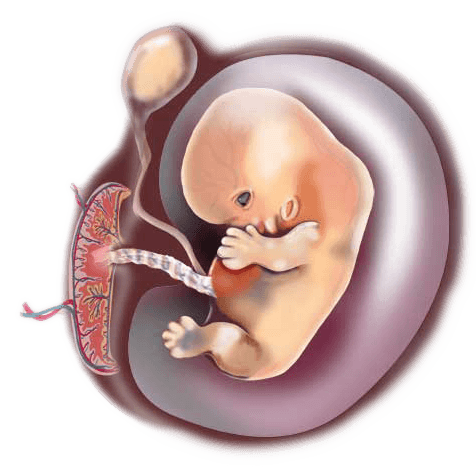
1st Trimester: Your Pregnancy from Conception to 8 weeks
What’s happening in the baby’s body: Baby’s facial features are beginning to develop. And while you won’t be able to feel it, your baby will start to make small movements this week as prenatal development progresses.
What’s happening in mom’s body: You may be feeling quite a bit of nausea this week. In addition, aversions and cravings are often associated with nausea. These symptoms are thought to be due to rising hormone levels in your body.
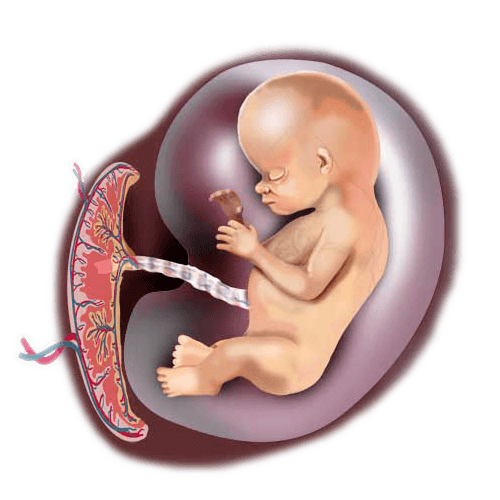
2nd Trimester: The Growth of Baby at 13 weeks
What’s happening in the baby’s body: Baby’s bladder is hard at work! Baby is swallowing amniotic fluid, filtering it through the kidney, and passing it as urine about every 30 minutes.
What’s happening in mom’s body: By week 13 you may notice that your waistline is expanding; however, it will probably be a few weeks before your belly appears noticeably pregnant to others.
Note: Be sure to talk to your doctor and see if the PreTRM® test is right for you and your pregnancy.
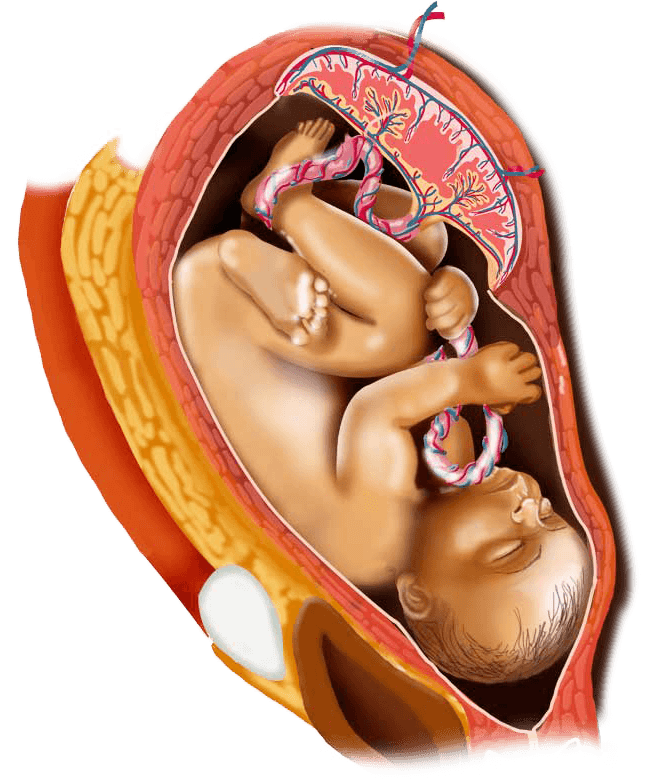
3rd Trimester: Fetal Development at 27 Weeks
What’s happening in the baby’s body: It’s likely that your baby now has a regular sleep cycle by this week.
What’s happening in mom’s body: The hormonal changes in your body may be causing some pain in your pelvic joint at this point in your pregnancy.
FAQs about baby’s development during the pregnancy weeks
What is the first organ to develop in a fetus?
The first organ to develop in a fetus is the heart. The development of the heart begins very early during embryogenesis, usually around the third week of gestation. The process begins with the formation of a simple tube-like structure called the primitive heart tube.
The development of the heart involves complex steps and intricate processes. The primitive heart tube eventually divides into various regions that give rise to different parts of the heart, including the atria, ventricles, valves, and blood vessels. As development progresses, the heart undergoes further changes and morphological transformations to become the fully functional organ responsible for pumping blood throughout the body.
It is worth noting that although the heart is the first organ to form, it does not mean it is fully developed and functional at such an early stage. The heart continues to grow, mature, and refine its structure and function throughout fetal development and even after birth.
What weeks are most important for fetal development?
Fetal development is a continuous process that spans the entire duration of pregnancy. However, certain weeks are considered particularly important for the major milestones and organ development. Here are some key weeks that are crucial for fetal development:
Week 3 to 4: This is when fertilization occurs, and the zygote implants itself into the uterine wall. The formation of the primitive streak, which eventually leads to the development of the neural tube (precursor to the brain and spinal cord), also takes place during this time.
Week 8: By this time, the major organ systems start to form. The embryo is now considered a fetus. Key developments include the formation of the face, arms, and legs. The heart is fully formed and begins beating. The brain continues to develop rapidly.
Week 12: The end of the first trimester marks an important milestone as the risk of miscarriage significantly decreases. By this stage, the fetus has developed all essential organs and body structures. It starts to exhibit reflex movements, and external genitalia may be visible.
Week 20: Around halfway through the pregnancy, the fetus undergoes significant growth. The mother can often feel fetal movements (quickening). The baby’s skin is covered with fine hair called lanugo, and vernix caseosa, a protective coating, forms on the skin.
Week 24 to 28: These weeks mark the viability stage, where the fetus has a chance of surviving outside the womb with medical support. Lung development progresses, and the baby starts to practice breathing movements. The eyes begin to open, and brain development continues.
Week 32 to 36: The final weeks of pregnancy are important for further growth and refinement of the baby’s organs and systems. The lungs continue to mature, and fat accumulates under the skin, providing insulation and energy reserves.
It’s important to note that while these weeks represent significant milestones, fetal development is a dynamic and continuous process. Throughout pregnancy, the fetus undergoes ongoing growth, maturation, and fine-tuning of its organs and systems. Every week is essential in contributing to the overall development and preparation for life outside the womb.
Which trimester is the most critical for brain development?
The development of the fetal brain is a complex and ongoing process that occurs throughout pregnancy. However, the most critical period for brain development is generally considered to be the third trimester. During this time, the brain undergoes significant growth, structural organization, and maturation.
Here are some key aspects of brain development during the third trimester:
Neural proliferation: During the third trimester, there is a rapid increase in the number of neurons in the fetal brain. This process is known as neural proliferation and is crucial for the overall size and complexity of the brain.
Neuronal migration: Neurons in the fetal brain need to move to their appropriate locations to form functional circuits. Neuronal migration is a critical process that occurs predominantly during the second and third trimesters, ensuring that neurons reach their designated regions in the brain.
Synaptogenesis: Synaptogenesis refers to the formation of synapses, the connections between neurons. In the third trimester, synaptogenesis accelerates, leading to the establishment of a vast network of connections within the brain. This process is fundamental for communication between brain cells and the development of functional circuits.
Myelination: Myelination, the process of adding a protective myelin sheath around nerve fibers, occurs predominantly in the third trimester and continues into early childhood. Myelin helps facilitate efficient and rapid transmission of electrical signals between neurons, contributing to the development of cognitive and motor functions.
Maturation of brain structures: During the third trimester, various brain structures undergo further maturation and specialization. This includes regions involved in higher cognitive functions, language processing, sensory perception, and motor control.
While brain development is influenced by genetic factors, environmental factors and experiences also play a crucial role. Adequate nutrition, proper prenatal care, and a supportive environment can contribute to optimal brain development during the third trimester and beyond.
How can PreTRM TEst help you prepare?
Premature birth can occur spontaneously—known as spontaneous preterm birth (sPTB)—or because of a medical intervention–known as medically indicated preterm birth (miPTB). The PreTRM® Test was designed to identify pregnancies at high risk for spontaneous preterm birth.
By knowing your risk, the PreTRM Test can help both patients and healthcare providers stay alert to the signs and symptoms of preterm birth and give parents extra weeks to prepare for the possibility of a preterm birth.
Request the PreTRM® Test
Haven’t had the PreTRM Test yet? Talk with your healthcare provider or you can have a kit shipped to your home.